logo
Home Blog

Reverse Osmosis Water Filter Flow Rates Explained

Certification
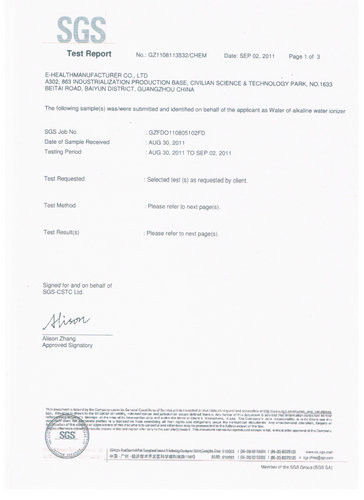
China EHM Group Ltd certification
Customer Reviews
As being your sole distributor of water ionizers in Thailand for the past 2 years, we really appreciate your strong support & professional services.

—— Mr. Lim from Thailand

You really did a wonderful job on our OEM Alkaline Water Pitchers. We appreciate your professional assistance during the past 3 years’ cooperation.

—— Mr. David from Toronto Canada

EHM supplied us full healthcare products of quite good quality & prices. I thank you for your professional service & higher standard quality control.

—— Mrs. Faith from Lagos, Nigeria

I'm Online Chat Now
Company Blog
Reverse Osmosis Water Filter Flow Rates Explained
Latest company news about Reverse Osmosis Water Filter Flow Rates Explained

When shopping for reverse osmosis (RO) water purifiers, specifications like 400 GPD or 600 GPD are often treated as gold standards for performance. However, many users experience confusion after installation: why do these "high-flow" systems still produce disappointingly slow water output? The reality is that GPD (Gallons Per Day) measures theoretical production capacity under ideal lab conditions, not direct faucet flow rate. Understanding this distinction is crucial for making informed purchasing decisions and optimizing household water usage.

What Does GPD Really Measure?

GPD quantifies the total volume of purified water an RO membrane can produce in 24 hours under standardized test conditions. This metric primarily reflects the membrane's filtration capacity. However, these "standard conditions" typically assume:

  • Water temperature of 77°F (25°C)
  • Inlet water pressure of 60 psi
  • Good quality feed water

In real-world home environments, these variables constantly fluctuate, often resulting in actual production rates significantly lower than advertised specifications.

Key Factors Affecting Real-World Performance

RO system efficiency depends on three physical factors, where any deficiency creates a domino effect on water production:

  • Water pressure: The RO process requires sufficient pressure to overcome osmotic pressure. Low household water pressure dramatically reduces water molecule penetration through the membrane.
  • Water temperature: Membrane permeability is highly temperature-dependent. Colder water increases viscosity and flow resistance. During winter, even a 600 GPD system may produce half or less of its summer output.
  • Feed water quality: Higher Total Dissolved Solids (TDS) content increases osmotic pressure. Poor water quality not only reduces filtration efficiency but also accelerates filter wear.
Production Capacity vs. Flow Rate: Critical Differences

Consumers frequently confuse two distinct concepts:

  • System capacity (GPD): Measures total daily water processing capability, determining how quickly the system replenishes storage tanks or maintains continuous supply.
  • Flow rate: Refers to immediate water discharge speed at the faucet, influenced by pipe diameter, faucet design, tank pressure (for tank systems), or booster pump performance (for tankless models). Even high-GPD membranes can deliver slow flow if plumbing components create bottlenecks.
Holistic System Design Considerations

RO systems comprise multiple components - pre-filters, tubing, flow restrictors, pumps, and faucets - working as an integrated unit. Tank-based systems use stored water to meet immediate demand, where perceived "speed" reflects tank pressure release. Tankless models rely on powerful booster pumps for real-time filtration. Therefore, selecting a high-GPD system doesn't guarantee faster faucet flow; it's more suitable for high-volume usage scenarios requiring rapid water replenishment. Most households should evaluate actual water needs, installation space, and local water conditions rather than chasing maximum GPD ratings.

Pub Time : 2026-08-07 00:00:00 >> Blog list
Contact Details
EHM Group Ltd

Contact Person: Mr. Tim Wang

Tel: 86-20-36548852

Fax: 86-20-36548839

Send your inquiry directly to us (0 / 3000)

contact

Address: Building 1, No. 3 of Xianke First Road, Huadong Town, Huadu District, Guangzhou City, Guangdong Province, China